↓
 

Global Traveller Blog

Beyond the Bucket List

  • Home
  • About
  • Featured Images
  • Latest Trip
  • Visiting Sanliurfa
Home - Page 4 << 1 2 3 4 5 6 … 37 38 >>

Post navigation

← Older posts
Newer posts →

Harran

Global Traveller Blog Posted on October 20, 2023 by JeanneOctober 31, 2023

Harran is said to be one of the oldest continuously inhabited spots on Earth, founded between 2500 and 2000BC possibly by Sumerian traders.  It’s mentioned in the Book of Genesis as the place where Abraham stayed for a few years in 1900 BC. It was associated with worship of the moon god, Sin, also worshipped in Sogmatar which I visited yesterday. Although we had warm but comfortable October weather I can certainly understand worshipping the moon and not the sun in the scorching summer heat!

One of the paradoxes of travel is that it is in the crummiest of hotels that you often meet the most interesting people. I really hated the rundown somewhat decrepit Grand Babil Hotel, but it did have a pleasant courtyard where it was easy to meet other travellers.

Not over drinks! Sanliurfa is a devout town and as dry as a desert.

It was in the courtyard that I met the two Germans: Martin, the history teacher and Klaus, the doctor. We agreed to visit Harran which is a little over 40km south of Sanliurfa.

We headed to the bus station to pick up a mini bus headed to Harran and eventually found one. The way the system works is that you have to wait for more passengers before the driver goes anywhere. So that took some time. And then the driver circled town to try to find more passengers so it would  fill up. More time wasted. The trip that should have taken an hour wound up taking at least an hour and a half. Then we got there and weren’t sure where the actual village was. It was just a dusty strip of road with some stores and shops along the side. But where there are lost tourists there’s money to be made so we were soon approached by several guys offering us to drive over the hill in front of us to the entrance to the village.
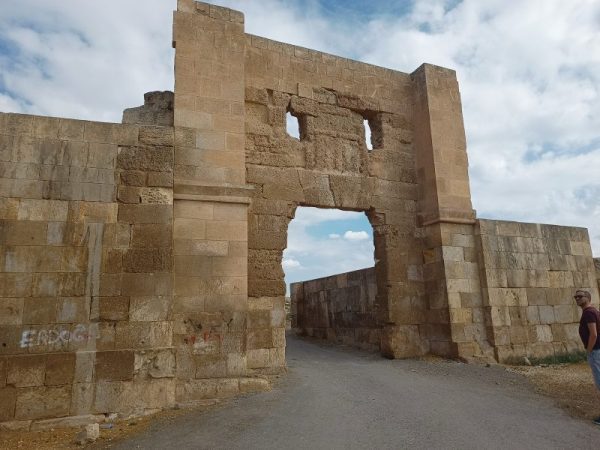
The “Aleppo Gate” built in the 12th century and marking the beginning of the road to Aleppo, Syria. The Syrian border is 20km south of town.

The village is famous for its beehive house architecture a few examples of which have been gussied up for tourists. It’s a scraggly village and there are a few other beehive houses where people seem to actually live. There were once hundreds of them. It’s marvelously cool inside.

Beehive houses

Since wood is rare in the region around Harran owing to its climate, locals have traditionally built houses from materials they could easily gather such as stone, brick and wood] The modern beehive houses were constructed by locals who learnt how to build them by examining excavated ancient buildings and used bricks gathered from the ruins as building material. The beehive houses were compatible with the nomadic lifestyle of the locals since they can be built and dismantled rapidly, like a tent, but also efficiently resist both heat and cold. Because of the weak materials used for plastering the beehive houses require repair every 1–3 years. Their walls are usually 50–60 centimetres thick and their domes are about 20–30 centimetres thick. The domes have an opening at the top which provides natural air circulation and ventilation. This feature, combined with the thick walls, provide relatively good indoor conditions throughout the year, even in the extreme summer heat. (Wikipedia)

There is also a large but crumbling castle in the village which dates from the 11th century, possibly earlier. It must have been an extremely strong fortress at the time but is now falling apart. Workers are trying to shore up the foundations.

Impoverished, decrepit and underpopulated, Harran is one of those places that’s far more interesting to read about than to visit. It took real imagination to picture Harran as the important trading city it once was.

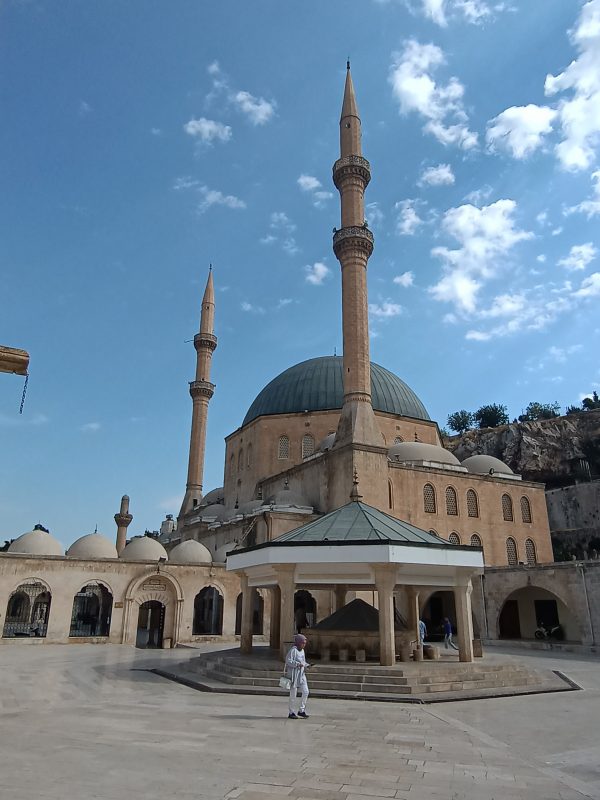
We traipsed over to see the minaret of the Grand Mosque which was undergoing extensive restoration and then caught a mini bus back to Sanliurfa.

Although I had a tasty dinner at the huge Cevahirhan restaurant I paid the price later on with major stomach turbulence.

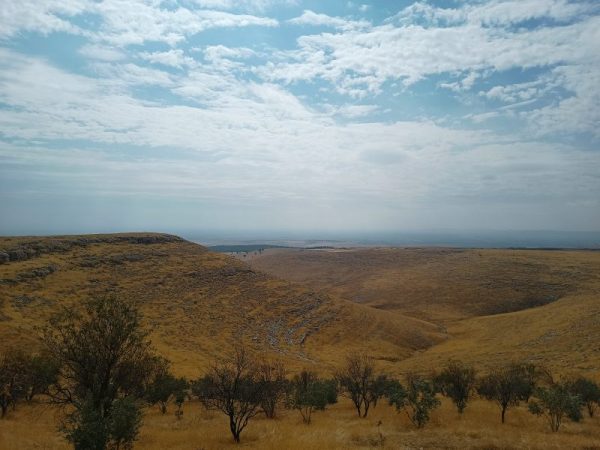
Posted in Southeast Turkey | Leave a reply

Gobekli tepe and Karahan tepe

Global Traveller Blog Posted on October 19, 2023 by JeanneAugust 26, 2024

The world’s oldest Neolithic sites, Gobekli tepe and Karahan tepe date from around 9000 BC. Their discovery changed how archaeologists tracked human history. Before Gobekli tepe it was thought that humans developed agriculture after which megaliths and religion emerged.

Nope. Throw out the old books. The builders of Gobekli tepe were hunter gatherers who hadn’t yet discovered the wheel and yet managed to erect this megalithic site filled with giant statues. Was it a temple? That’s the supposition but no one really knows. A recently discovered cistern means there may have been a settlement. It was in use from 9500 to 8000 BC.

Visiting these two sites was the purpose of my visit (or pilgrimage?) to this strange corner of Turkey.

I started roughly around 9:30 from Sanliurfa with Sore tours. One other guy joined us, a Turk who was late. Radwan is a Kurd who pointed out that Kurds were prompt, unlike Turks!

As a side note, the region is also heavily infiltrated by the PKK, a Kurdish separatist group.

Gobekli Tepe

Radwan spoke excellent English and clearly had read up on the subject.  As we approached he pointed to another mound next to the main excavation point that had two trees on top of it. In his view there’s probably more to discover under that mound as it was slightly higher than the excavated portion.

The site is very slickly presented. We began in the visitor center which explained  the background of the site, what is known about it, how it was discovered and what may remain to be discovered. A multimedia presentation richly evoked what may have been the rites performed at the site. There was drumming under the stars and it all looked very psychedelic.

There was also a reproduction of the famous pillar 43 with its mysterious engravings. In the lower left a vulture appears to be holding a human skull. Skull cult or what? So there’s that.

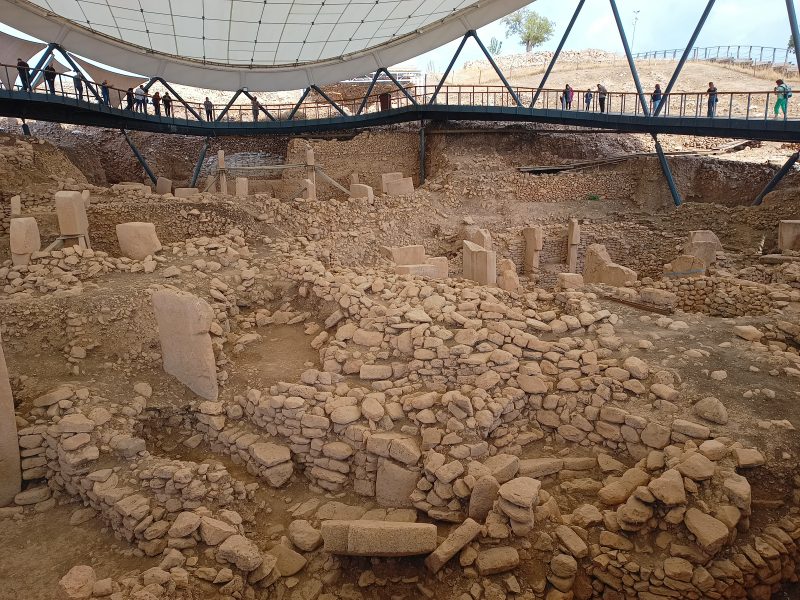
Rather than take a mini bus to the excavation point we walked along a boarded walkway which added to the sense of anticipation.

Being there emphasized just how visible the site was from a very long way. The plains stretched to the horizon broken only by other smaller mounds. The site may have attracted people from around the region who came to find mates and/or participate in rituals.

The site is covered to prevent damage from the elements.

What struck me was just how small the enclosures were. I had expected them to be bigger. They were intimate spaces totally dominated by the giant statues with their mysterious carvings. The statues are in the center surrounded by stone benches. Why?


The T-shaped pillars are abstract representations of humans. Some wore belts (hard to see here) Why abstract? They knew how to make lifelike sculptures.

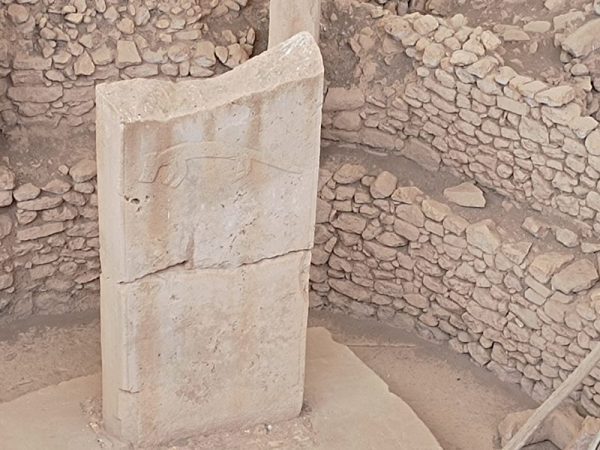
Why a fox? What did it signify?


Pillar 43. Is there an astronomic message? Are the designs along the top meant to represent a comet? Maybe the one that might have struck earth several thousand years earlier wiping out the mammoths and a prior civilization? What’s up with the vulture? Did the scorpion refer to the Scorpius constellation?


There’s that fox again.


Is that a large cat of some sort?

Ducks


More critters

Bull?

A great deal more is on exhibit in the Sanliurfa Archaeological Museum which is currently closed for repairs after a flood destroyed the electrical system

Will have to go back!

Radwan went with a time capsule theory similar to the one proposed by Graham Hancock on the Ancient Apocalypse Netflix series . He pointed out  that the site was intentionally buried and that people traditionally bury valuable things like their gold or their money. Given the size of the site it was clearly a great deal of work to pour dirt and refuse over that entire area. Why did they do it? Were future generations supposed to receive a message?

Being there only deepened the incredible mystery around this site. I did not know that the Germans were no longer in charge of the excavation but that it had been taken over by Turkish archaeologists who in fact have not been excavating it. Less than 5% of the site has been excavated! If we uncovered the rest I wonder what secrets we would discover.

But excavations are expensive and Turkey has financial problems.

We must have spent a couple of hours at this site. I don’t know. I was so enthralled I wasn’t looking at the time.

In somewhat of a daze we headed to  the car and started the long drive to Karahan tepe. The landscape was mostly  flat except for the mounds.

Radwan pointed out that there are over 30 sites revealed by ground-piercing radar that have not been excavated. As we looked around he asked us to notice how many mounds there were on the landscape that  very well could have been artificial. In his view, (I believe that he keeps up with archaeological news through the local press),  the entire basin  was the site of a large civilization.

We stopped at a local service station and bakery and market to pick up fruit and bread for our picnic at Karahan Tepe.

Karahan Tepe

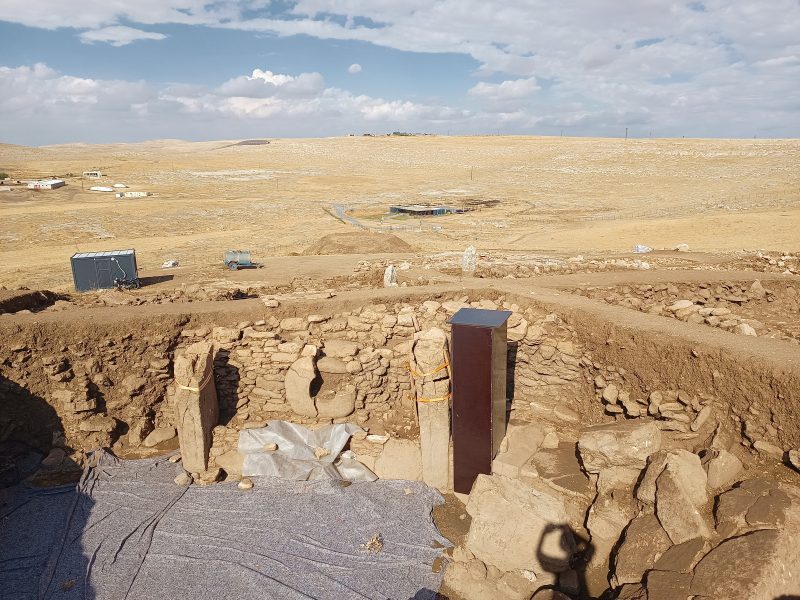
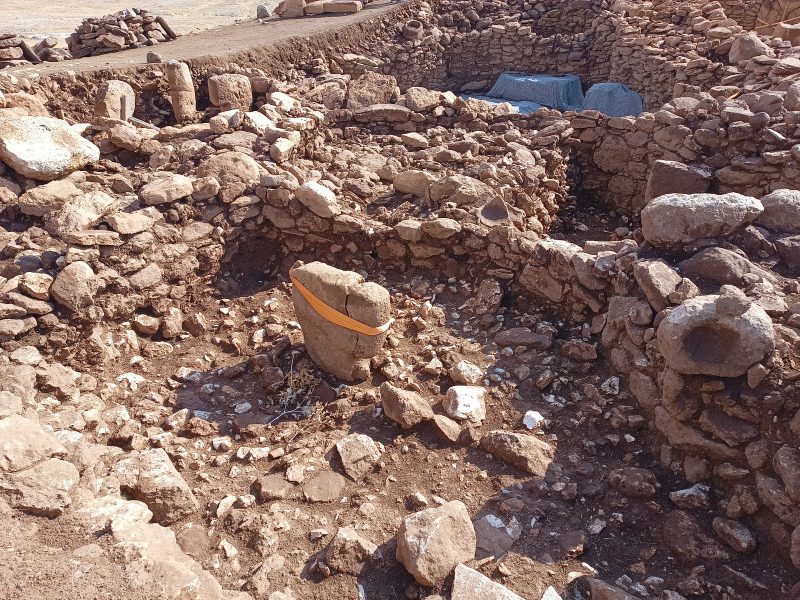
The site was in the middle of nowhere. Unlike Gobleki tepe, 46km to the east, Karahan tepe is  not “managed”. There’s no protective covering which means that many statues have been removed to the Sanliurfa Archaeological Museum. It’s also a wilder and more evocative site.

The effect was even more odd and unusual then Gobekli tepe. The stone was different. Some of the carvings (fox) were the same as Gobekli tepe although it’s thought that this site is a few hundred years older. Naturally I was looking for the amazing 7-foot statue of a male that was only discovered a few weeks earlier. It’s the oldest human statue on earth.


We looked and looked and all I could find was the site where it once stood. The caretaker informed us it was not possible to leave that statue standing 7 ft high because it was too fragile. He said that it was cut in three pieces and laid on the ground.

Excavation work is actively continuing at Karahan tepe. There’s a great deal of excitement around this site. Unlike Gobleki tepe, Karahan has a winter solstice alignment.

Where the statue of a man once stood.

Sogmatar

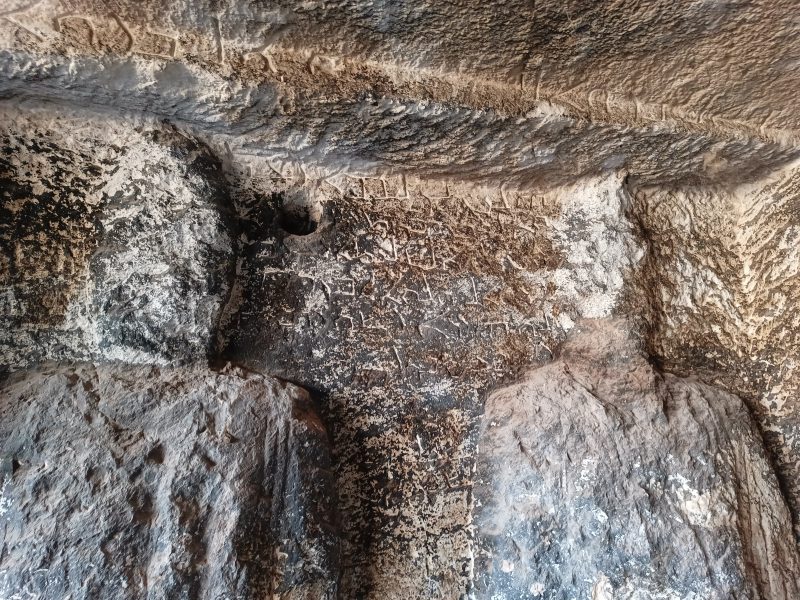
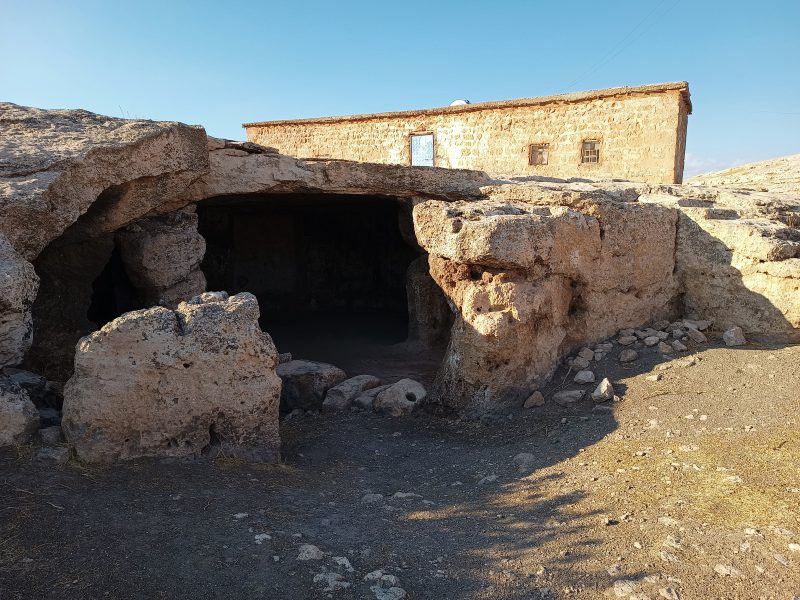
After chatting with the caretaker over fruit and tea we left for the long drive to Sogmatar. The rolling landscape was stony and not cultivated. The road wound on and on with nothing in sight but more stones. It was strange and a little scary. Finally we got to this isolated village. It was a pagan site where sacrifices were once made to the Sun and Moon gods and was in use from 150-200AD. Their effigies are carved into the side of a cave.

Is it possible that the builders of Gobleki Tepe lived in caves just like this one?

Then we climbed to the top of the open air altar which afforded magnificent views around the region.

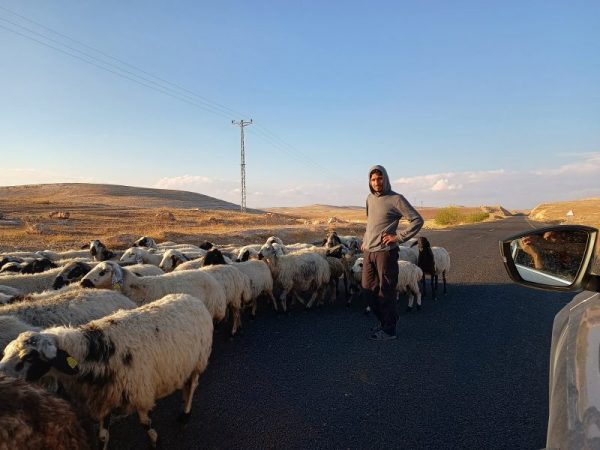
The regional rumor is that Moses lived in Sogmatar after escaping from the Pharaoh. The desolation and isolation of the village made it easy to imagine a link to the Bible. There were a few people living in these mostly abandoned buildings and some of the children accompanied us down from the altar. The main occupation was tending sheep.

What a day!

Posted in Southeast Turkey | Leave a reply

Sanliurfa First Impressions

Global Traveller Blog Posted on October 18, 2023 by JeanneAugust 27, 2024

It was a long and tiring but uneventful trip from Nice to Istanbul and then from Istanbul to Sanliurfa.

(See my guide to visiting Sanliurfa)

On the bus ride from the airport to the Grand Babil Hotel, I found myself talking to a lovely young woman who is a resident of Sanliurfa. Filiz works for an international aid agency who is involved with helping Syrian refugees. When I asked about the earthquake last February she spoke on detail about how scared she was. She also told me that the archaeological museum was still closed which I hadn’t known. Very disappointed.

There’s nothing Grand about the hotel but it is well located.

I was astonished to find this NYTimes article appeared on the day I arrived!

Sanliurfa is a dry town. I was glad I picked up a jagermeister at the airport. I would have slept better if the call to prayer hadn’t woken me up at 5am.

After picking up a map at the tourist office this morning I was able to finally arrange my excursion to Gobleki tepe and Karahan tepe tomorrow.

The head of the tourist agency informed me that tensions are quite high right now and there are bad feelings towards Americans. Anyway I’ll be taking a private taxi tour with someone else tomorrow.

Time to explore Sanliurfa!

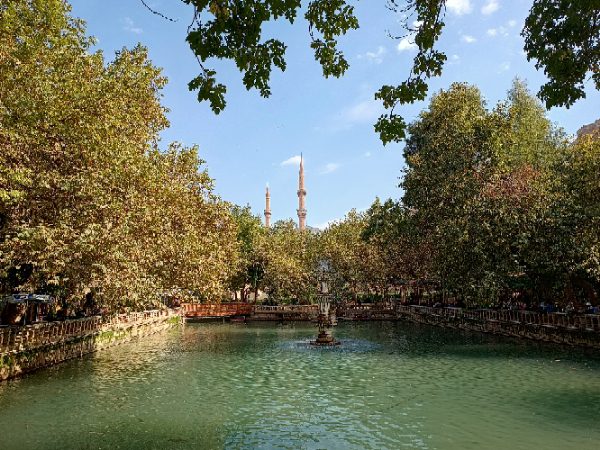
First stop was Golbasi. Below is the Baliki Gol and the Rizvaniye Vakfi mosque and Madrassa.


According to legend, King Nimrod was so burned up that Abraham was destroying his idols that he tossed him into a pit of fire. But God turned the fire into water and the burning coals into fish which are still in this beautiful pool, Baliki Gol, today. They are considered holy.

The second pool in the complex is

AYN-ZELiHA LAKE

Zeliha, the king’s daughter seeing the miracle in which Prophet Abraham was rescued from fire, accepted the invitation to Islam and rejected the claim that her father was God before him. Nimrod reacted with anger and threw his daughter into a fire. Nimrod watched his daughter’s burning and death with an attitude of indifference. A lake formed in the place where Zeliha fell and fish appeared in the lake. The place is called “the spring of Zeliha” or “the tears of Zeliha” (Zeliha’s Lake). The fish are not eaten because they are believed to be holy.
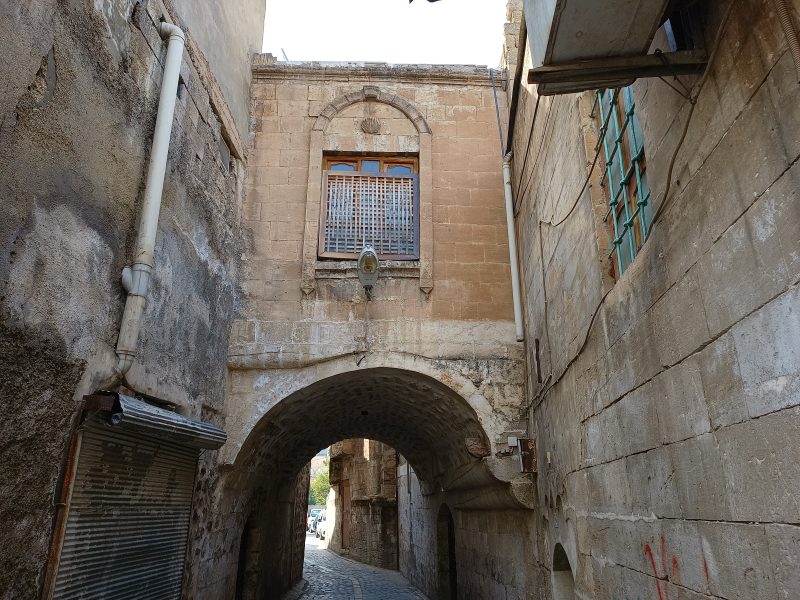
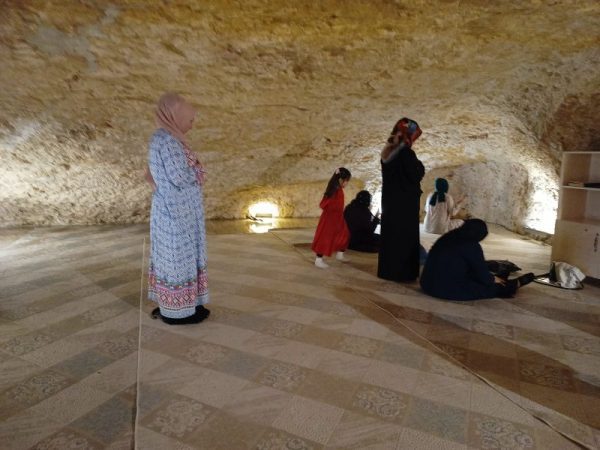
Mevlid I Halil Cave

“Mevlid” means “the birth of prophet”. The cave was called Mevlid-i Halil Cave because people believe that the prophet Abraham was born there. According to tradition, when King Nimrod’s soothsayer informed him that he would have a child that would wipe out his religion and demolish his kingdom, he ordered all children to be killed. Nuna, the mother of Abraham, was pregnant when she learned of the king’s decree. So, she dared not share the good news of her pregnancy. Instead, as the day of delivery grew near, she hid in cave. It was there that she gave birth to Abraham. After the delivery, she came secretly every day and suckled him. Tradition holds that a gazelle also came every day on the order of Allah and suckled him. Abraham stayed in the cave for years, only leaving when he was a 15 year- old boy.

Most but not all women here do cover their heads. Sometimes more. Lots of chadors but I didn’t go that far!

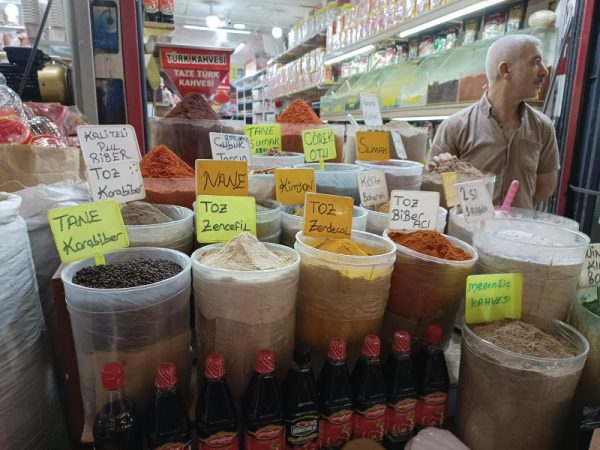
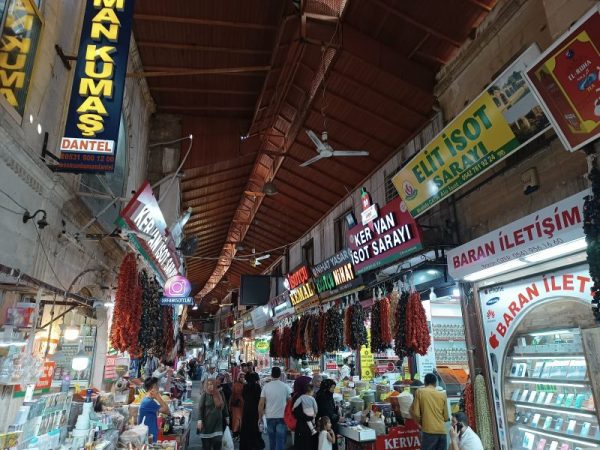
The lakes, parks and mosque had such a peaceful vibe. The Bazar was much livelier. As Sanliurfa is one of the world’s oldest continuously inhabited cities, the narrow stone streets were indeed evocative of Abraham’s time.

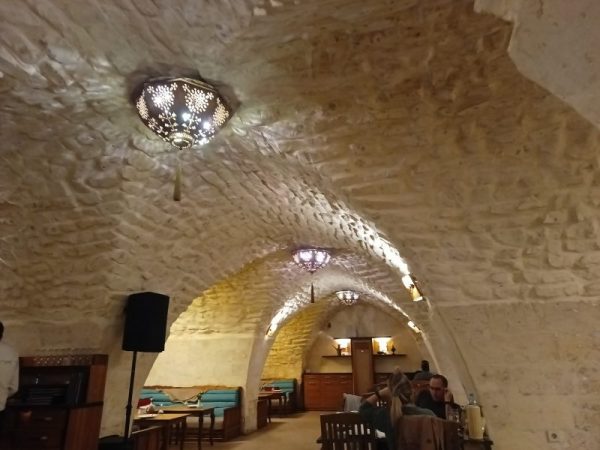
Ate at the famous Cevahir Han.Amid all the lamb I managed to extract a delicious chopped salad with walnuts and pomegranate syrup along with a thin crust cheese pizza.

(See my guide to visiting Sanliurfa)

Posted in Southeast Turkey | Leave a reply

Girona

Global Traveller Blog Posted on October 30, 2022 by JeanneApril 28, 2023

October 18

Well I sure messed this one up. I wanted to get to Girona before noon but I couldn’t find the right trains at the right price. So I spent a couple of hours chilling in the Barcelona train station and arrived here at the immense and modern train station at 1:30. Maybe because I was tired I got hopelessly lost following Google maps, trudging around for nearly an hour before a taxi driver and the Pension Borras finally got me here. It should have been a 1O minute walk. I was exhausted, hot and hungry. Not a good start.
I’m a big fan of Spanish trains though. The two that I took today were bullet trains running at around 200km/hour. So comfy and efficient. The scenery was like so many train rides in Europe. Fields, orchards, greenhouses and every so often some mysterious splotch of low buildings. Around them are odd machines, shipping containers or metal towers with tubes and pipes that may or may not emit smoke. It’s always in the middle of nowhere and often marked by a big sign with an unrecognizable name: Axxol! Crexxon! Spizzfor! Fertilizers? Farm equipment? Industrial supplies? Who knows.

After recuperation I took a look around town. The  medieval center has been extensively rehabilitated. It’s substantially more touristy than Tarragona’s with lots of shops and boutiques. Some are trinkets and claptrap; others are luxury goods, artisanal products or local jewelry designers. What there aren’t are simple grocery stores or services.

A walk along the river Onyar was stunning.

The Cathedral was striking but as I had just visited the one in Barcelona I decided not to tackle the inside.

As a history buff I couldn’t miss the Girona history museum which traces the history of the town from the Romans to the Inquisition and beyond. It was excellent. I was particularly impressed with the 3rd century Roman mosaic.

The dining scene is nowhere near as diverse as Barcelona but this squid ink linguini with prawns hit the spot.

One of the major highlights of Girona is the medieval wall that nearly encircles the town and is the longest in Europe. The walk begins in parkland and ends over the town center with sweeping views along the way.

But the main claim to fame of Girona is the nearly intact Jewish quarter that recalls a community that thrived until its expulsion in 1492.

The Jewish history museum built in the restored synagogue. I particularly loved the 11th century miqvé or ritual bath.

Exhibits recount the daily life and practices of the Jewish community until the forced conversions and expulsion of 1492. It was a Jewish rabbi who provided the astrolabe that enabled Columbus to navigate to America that same year. This sculpture memorializes the two event.

To make sure I could find the train station for my early morning train to Paris, I took the 10-minute walk to the station which is to the side of a spectacularly ugly treeless plaza built to accommodate it. Along the way I passed Independence plaza with lively restaurants and cafes emerging from the arcades.

The restaurants in Girona were heavily meat-oriented with few concessions to vegetarians, or pescatarians for that matter. I chowed down on a decent pizza and turned in early to rest up for my long train ride.

Posted in Spain | Leave a reply

Tarragona : a Roman centre

Global Traveller Blog Posted on October 30, 2022 by JeanneApril 28, 2023

I have to admit that when I stepped off the train in Tarragona I wondered if I had made a mistake. The buildings seemed so drab and the town seemed underpopulated in comparison to bustling Barcelona. “Where the people at?” was my first thought.

The Hotel Pigal was wonderfully located with a convivial kitchen/dining room at the center.

After an encouragingly warm welcome, I headed to the nearby covered market to nibble on some tapas and pick up breakfast for tomorrow. The people (now that I found them) were noticeably friendlier than in Barcelona where too much tourism had rubbed the shine off their personalities.


October 15

Nothing makes me happier than filling up my day pack and setting out to explore a new city. It’s exhilarating. Of course I headed first to the Roman amphitheatre and was lucky enough to stumble on a public training session and show by the local Gladiator School. Yes, gladiator training is a thing and what a great workout! Did you know that there were women gladiators? I did not know that. The gladiator teacher gave a detailed rundown of gladiator work and it’s place in Roman society. What a hoot. I could hardly tear myself away.

But I  did. Next stop was the Roman Circus because I’m a sucker for Roman ruins. What I love about the Romans is that as soon as they conquered a place they set up an amphitheatre big enough to hold thousands of spectators for the gladiator contests. Tarragona was an important center so they also built a Circus for exciting chariot races.


All of this entertainment was free. Everyone went from commoners to patricians. Free entertainment. What a concept. Aside from parades and fireworks a few times a year, what do we get for free? Football games? Stadium concerts? Blockbuster art exhibitions? Movies? Shows? Pay, pay, pay.

Anyway, the Circus made for an excellent visit. I would recommend starting at the rooftop which gives an overview of the Circus, vaults and ancillary structures. Starting at ground level makes it tough to appreciate the layout of these extensive ruins.

After that, I visited the immense Cathedral, a mixture of Romanesque and Gothic architecture. Clearly medieval Tarragona was a prosperous place. I later found out why.

Meanwhile the cathedral cloister honored one of the Great Moments in Cat History.

It seems that a rich nobleman was plagued by rats who grew so bold they even swarmed over the table when the King was invited to dinner. The poor guy scoured his territory to find an effective mouser. But all the cats failed to catch the rats who burrowed into their rathole. Finally one clever feline went up to the rathole and played dead, paws in the air.

The rats carried the cat out for a funeral which you can see in the upper left side of the carving that adorns the cloister capital. Surprise surprise! The cat “rose from the dead” and killed all the rats which you can see on the right. The nobleman was so grateful he vowed to honor the brave cat in the cathedral. And so it was done.

Saturday night in Tarragona was a blast. Everybody was strolling La Rambla or crowding the bars and cafes. Great energy.

October 16

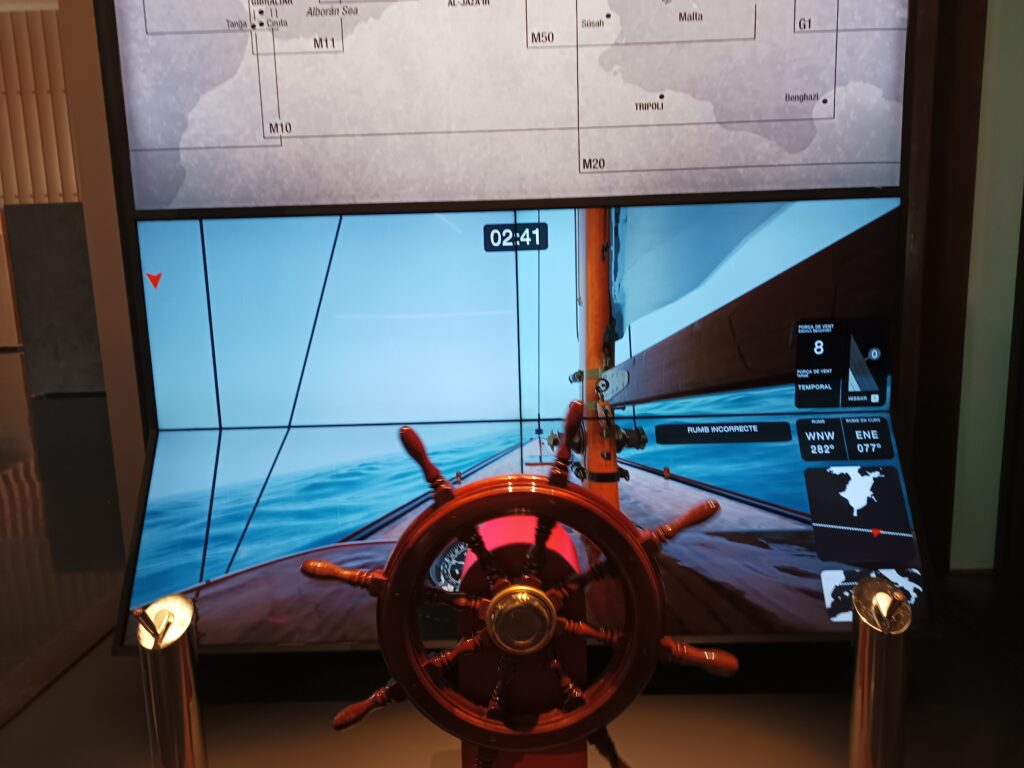
Decided to head to the port area where the temporary archaeology museum was housed. Alas there was only an exhibit about the archaeology exhibits. The Port Museum was great though — modern and we’ll laid out. Of course the Port is the secret behind Tarragona’s  prosperity then and now. Once they exported agricultural produce, now it’s fish and a lot of petroleum products. Best of all was a simulated game where you tried to steer a ship to one of Tarragona’s trading partners, Naples or Tunis or Ostia. It was hard! A series or people tried to do it and failed.

I wasn’t too impressed with the Port neighborhood. Clearly all the old fisherman houses had been torn down and replaced with modern buildings. There was a stretch of pricey fish restaurants and not enough trees to make strolling comfortable.

Before lunch I took a quick look at the Roman forum which was right up the street from my pension. It was Ok. I realized that I was probably staying on the old Roman Cardo which was cool.

I had lunch in the main square. It’s hard to get a bad meal in Tarragona. The cimarronnes were tender and fried to perfection. I found a place, Cafe del Centro that served a delicious paella marisco for only one person and an incredible Japanese ramen place, Shifu Ramen. The price of a meal seems to hover around €12.50.

I took a rest after lunch as I’m finding it too tiring to climb around all Tarragona’s hilly streets in the heat. At around 25° it’s hotter than I expected.

My pension has a large common room with a table, free tea, cutlery and a fridge. It’s very convivial. I fell into “conversation” with an Irish couple. Because of their heavy brogue I had no idea what they were saying. Something about sheep and wool and stealing. I nodded and smiled and left as soon as possible.

As night fell I headed uphill to the Roman and medieval walls bordered by a lovely park. It was of course closed but beautifully illuminated.

The quiet medieval streets of the Upper Town between the Cathedral and the walls were well maintained and evocative of Tarragona’s illustrious past.

October 17

As it’s Monday and all museums and monuments are closed I planned a day at the beach. Alas, the weather was cloudy with rain in the forecast. I headed to the shopping center to pick up a gift, had paella for lunch and rested in the afternoon.

I gave another look at the medieval streets of the upper town, had a dinner of ramen and checked my travel plans for the following day.

Uh oh. My train to Girona did not leave from the train station down the street as I thought but from the Camp station 12km out of town. Rather than splurge on a taxi I figured there must be a bus but which one and when? And where was the bus station? Unraveling all of this chewed up my evening but I got it done.

Posted in Spain | Leave a reply

Post navigation

← Older posts
Newer posts →

CATEGORIES

Amtrak Across America

Arizona

Bangkok

Cambodia

Central Asia

China

Georgia

Greece

Hong Kong

Laos

Malaysia

Morocco

Naples

Poland

Rome-Sardinia

Roya Valley

Sicily

Southeast Asia

Spain

Taiwan

Turkey

Southeast Turkey

Administrative

  • Log in
  • Entries feed
  • Comments feed
  • WordPress.org
©2026 - Global Traveller Blog - Weaver Xtreme Theme
↑